


Graduate studies in the department of chemistry brings you together with not only an exceptional research faculty and state-of-the-art research facilities, but also a student body from all over the world. Our tri-campus department spans the cities of Toronto, Scarborough and Mississauga, each campus residing in their own vibrant and diverse urban neighbourhoods.
Stay Informed & Get Involved
- Campus Life & Resources
- Student Life
- Career Exploration & Education
- Centre for International Experience
- Graduate Student Union
- Legal Clinics
- Mental Health Resources
- Departmental information on health and safety (including lab safety protocols)
If there is a specific topic you are needing information but is not addressed here, please contact the Graduate Office.
Meet Some of our Students
Below you can hear from some of our students share their thoughts on what graduate life is like at U of T.xx
 Isabelle Lao
I chose to come to U of T St. George for my PhD because my supervisor’s research aligned very well with my interests, and I could see myself thriving under her supervisory style. I also visited Toronto prior to joining the group and found the group dynamic very welcoming. Lastly, it was important to me to live in a big city with good public transit, so I was thrilled to be accepted into U of T St. George.
I find Toronto to be an expensive city, but not prohibitively so. While the stipend is enough to cover basic living expenses, I invested most of what I earned during my undergraduate degree and saved a lot of money before graduate school in order to have extra ‘fun’ money. Similar to many people, the largest fraction of my monthly spending is on rent. I currently live a 20-minute bike ride or a 30-minute streetcar to school with one roommate. Although rent is expensive, my roommate and I share a beautiful, spacious apartment, and I love my neighborhood. Outside of school, I travel 3-4 times a year to see friends and family, go to a concert about once a month, and eat out 2-3 times a week. While all these activities can be expensive, I find that my day-to-day life is cheap. I cook the majority of my meals, use the campus gym/ participate in intramural sports/ run outside for physical activity, borrow books from the public library, and play video games in my free time which are all low to no cost activities.
Here is a breakdown of my monthly spending:
| Rent/Utilities | $ 1400 |
| Groceries | $ 250 |
| Eating Out | $ 300 |
| Entertainment | $ 200 |
| Phone Bill | $100 |

Elyse Hudson
I am in my second year PhD with Prof. Andrew Beharry at the Mississauga satellite of the University of Toronto. I joined in 2021 after finishing my honours specialization in chemistry at University of Western Ontario where I focused on both proteins and peptides. In Prof. Beharry’s laboratory, I’m working on the synthesis of small, fluorescent molecules as tools for cancer diagnostics and therapeutics.
When considering graduate school, I found that it was most important to primarily think of the research being done by the supervisor as that is the main focus of your time during graduate school. I loved the research Prof. Beharry was doing and the opportunities that U of T offers, so being at a satellite did not impact my decision at all!
The Mississauga campus is filled with both nature and modern buildings, giving the best of both worlds. Going for a short walk around the university property is a great way to decompress while seeing the wildlife. If you have the chance, I would really recommend visiting the beautiful campus.
We also have tons of great amenities here, like a large gym with a swimming pool, a graduate student lounge, and the shuttle bus. Going to UTSG from UTM is not a problem because a shuttle bus between the two campuses is provided, with the cost included in your tuition! It runs everyday of the week, starting in the morning and ending late at night, so it is a great way to get downtown for class, seminars, and entertainment. Another amazing perk included in tuition is the MiWay bus pass; several bus routes go to campus, making transit very convenient way to get around the city without a car.
A huge incentive of UTM is the several student organizations available to graduate students! I am an executive member on CPS-GSA, the chemistry physical sciences graduate student alliance. We run plenty of events throughout the year including pub nights, monthly donuts, and Pilates classes, all of which act as great ways to network and stay in touch with peers within our large department. I have really enjoyed getting to know students in different scientific disciplines than myself and always look forward to catching up at events.
Mississauga also has loads to offer, outside of UTM. The main shopping mall, Square One, has some fantastic restaurants, pop-up stores, and tons of food festivals. The city hall free events, including live music performances, ice skating, and farmers markets. My favourite place to go is Port Credit, a cute lakeshore neighbourhood with great food, drinks, and views, that is easily accessible by MiWay. I really enjoy living in Mississauga because I has everything I would want in a city. Plus, when I feel like going downtown, the trip to Toronto only takes 30 minutes by GOTrain.
I chose to live alone in an apartment as it made me feel safer with COVID-19. However, it does make my monthly expenses a bit higher. For me, the peace of mind and freedom is definitely worth it! My commute to campus is about 20-25 minutes by bus but a friend lives nearby so the ride together feels much shorter. I love where I live but my second option would be Graduate Housing at UTM. Join the waitlist early to get your best shot at an apartment on campus!
Here is how I typically spend money each month:
| Rent | $ 1800 |
| Utilities and Food | $ 125 |
| Entertainment | $ 100 |

Rasangi Tennakoon
Hi, I’m Rasangi! I am currently in my second year of my PhD here in Chemistry at U of T, but I completed my undergraduate degree in Biochemistry at Western University. There, I became fascinated by RNA biology and the ways that subtle molecular changes can influence cellular function. That interest continued into my MSc, where I worked with Dr. Patrick O’Donoghue studying transfer RNA (tRNA) biology. My master’s research focused on developing and studying tRNA missense suppressors (engineered tRNAs that can correct certain genetic mutations) while also exploring how similar mechanisms occur naturally in cells. Through this work, I became particularly interested in the chemistry underlying RNA function and translation, as well as how these molecular processes can be leveraged to better understand human disease.
After finishing my MSc, I knew I wanted to continue studying RNAs while expanding into new techniques and research questions. The University of Toronto was a natural choice, not only because of the innovative research happening within the Chemistry department, but also because I was excited by the opportunity to live and work in a larger, vibrant city. Toronto’s diversity and energy were a big draw for me, and I’ve really enjoyed being part of such amulticultural community. In September 2024, I joined Dr. Haissi Cui’s group at the St. George campus, where my research broadly focuses on aminoacyl-tRNA synthetases and their role in white matter brain disorders, and on implementing next-generation sequencing approaches to study tRNA biology. The Cui lab has a very collaborative and supportive environment, everyone is friendly, willing to help each other troubleshoot experiments, and excited to discuss ideas. It is a great place to learn and grow as a scientist!
Outside of research, I enjoy staying involved in several scientific communities on campus. I volunteer with groups such as BioPhysTO and the Toronto RNA Club, where I help organize seminar series and conferences, including the Toronto RNA Enthusiasts Day (TREnD). Being involved in these communities has been a great way to meet researchers across different fields and contribute to the collaborative scientific environment at U of T.
I currently live in Etobicoke with my partner. We chose the area because it sits conveniently between my partner’s workplace and the St. George campus, making my commute a quick ~20-minute subway ride. Living slightly outside the downtown core gives us the best of both worlds: easy access to campus and the city while still having some separation from the busiest parts of Toronto. I’ve really enjoyed exploring different neighbourhoods, parks, and cafés, and going to concerts in the city. Being close to the subway line makes it simple to get around. As an avid reader, one of my favorite discoveries after moving to Toronto was getting a Toronto Public Library card, which gives me access to an incredible catalog of books across the city’s library system!
Here's a breakdown of my typical monthly expenses:
| Rent/Utilities | $ 1375 |
| Groceries | $ 200 |
| Entertainment | $ 200 |
| Transit: | $ 30 |
| Insurance: | $300 |
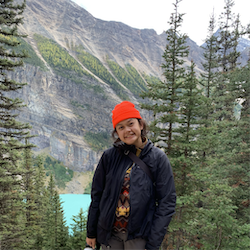
Anna Galang
I completed my undergraduate degree in biochemistry and neuroscience at the University of Toronto Scarborough campus. During my final year, I began working with Professor Ruby Sullan on my capstone thesis project, where I explored the interfacial and nanoscale properties of polymer films and nanoparticles. Soon after, I joined the Sullan lab as a PhD graduate student where I am now exploring the antimicrobial ability of polydopamine systems and how it affects bacteria.
Throughout my undergraduate and graduate studies, I have always appreciated how close-knit and friendly the community is here. We have access to Rouge Hill Conservation and Lake Ontario on campus, which are both fantastic places for jogging, biking, and hiking. We also have access to the Toronto Pan Am Sports Centre, a fantastic gym. We share a lab space with other UTSC groups, which makes it convenient for academics, post-docs, and graduate students to collaborate and develop connections. Additionally, we have access to excellent facilities like TRACES and CNS, which both provide cutting-edge tools.
Another excellent unifying factor on our campus is the student organizations, such as GSAS and our UTSC reps for ChemClub and WICTO, who keep us in touch with one another as well as the people at UTSG and UTM. We frequently meet for ChemClub's bi-weekly Krispy Kreme donuts and WICTO's monthly journal clubs. Because our community is smaller, we naturally find ourselves eating lunch together, going to the gym, or finding enjoyable local activities to de-stress.
Despite being a satellite campus of St. George, Scarborough is easily accessible from downtown via the TTC or the Go Train (1-1 1/2 hours). I have the fortunate privilege to still reside at home (Durham region) and drive to school every day for 20-30 minutes. I am aware that rent prices are high, however Scarborough is less expensive than downtown, with rent ranging from $1200 (without roommates) to $880 (with roommates), depending on how close the apartment is to campus. Whatever the case, there are a variety of rentals available, and even though it's a longer commute to campus, there are direct buses (TTC, Durham Transit and Go Bus) that drop you off right there. Another fantastic choice is the Graduate Housing at UTSC, which puts you directly on campus and is a 2–5 minute walk to the lab. However, spaces are often reserved for first years, so I would advise you sign-up early! All in all, Scarborough is a great campus and community to be a part of!
Here is my estimated monthly spendings:
| Gas/Insurance | $ 400 |
| Phone: | $ 80 |
| Parking (Yearly Pass $1156) | $ 144 |
| Groceries | $ 150 |
| Entertainment | $ 200 |

 Bilal Saqib
Hi! I’m a second-year PhD student in Prof. Patrick Gunning’s lab here at University of Toronto’s Mississauga campus (UTM). In my senior year of undergraduate studies, a research-based thesis course with the Gunning Group exposed me to the interdisciplinary nature of this specific medicinal chemistry/ drug discovery lab which greatly influenced my decision to stay and pursue graduate studies under the supervision of Prof. Gunning. Currently I am working on optimizing chemoproteomic methods for the analysis of small molecule therapeutics in vivo using mass spectrometry.
The Mississauga campus is tucked away just 30 km from St.George (downtown campus) by the Credit River. It features stunning modern architecture surrounded by several nature trails that are also home to a local deer population.
From the wildlife to award-winning architecture that is often used as filming locations by popular movies/tv-shows, this cozy campus has lots to offer. For example, tuition covers access to the athletics centre (RAWC) that has a large swimming pool, gym, high performance powerlifting centre, soccer field, squash, and basketball courts. You also get an annual Mi-Way (Mississauga transit) pass to explore the city along with a shuttle bus service to St. George which runs every 30 minutes Mon-Fri and over the weekend. The average trip to the downtown campus takes 45-60 mins and the shuttle serves as a convenient mode of transportation for seminars or class.
For food and entertainment, on-campus food options include the pub, bubble tea, the food court, and a several coffee shops. The campus graduate student clubs (CPSGSA and UTMAGS) hold fun monthly events in the grad lounge and larger holiday events that are a great way to network and destress with fellow graduate students and department faculty. In addition, the Chemclub based out of St. George also offers many organized events, formals, and nights open to students from all three campuses where transportation is covered.
Although there are on-campus housing options available for graduate students, I chose to live at home which makes for a 3-hr daily commute. While this may not be feasible for most, it can work with a little time management. If you live on or near campus, the South Common Centre, Erin Mills Town Centre, and the Square One Mall are a short bus ride away for all your grocery, food, and entertainment needs.
Here’s a breakdown of my monthly spending:
| Fuel | $ 900 |
| Grocery | $ 250 |
| Food | $ 200 |
| Phone | $ 50 |
| Entertainment | $ 100 |
Xiao Xiao
 Hello, this is Xiao, currently in the third year of doctoral program. I received my bachelor’s degree from Nanjing University in China, where my undergraduate thesis focused on catalysts based on carbon nanostructures. Before joining Prof. Xiang Li’s group, I was seeking an environment that could offer interdisciplinary research experience. Looking back over the past two years, I am confident that I have made the right choice.
As Xiang’s first chemistry graduate student, I was fully involved in the lab renovation process in the early stage of the group. Starting from scratch, we successfully made our chemistry and physics laboratories fully functioning on material preparation and characterization. As a group primarily focused on optical characterization, it is essential for us to work closely with researchers who specialize in material synthesis. In this regard, the University of Toronto provides an exceptional platform, enabling us to connect with experts within our department and across disciplines. Such collaborations create a complementary research ecosystem, where the synthesis and characterization groups optimize outcomes by learning from each other, and ultimately improve the quality of the collective work.
Beyond the laboratory, Toronto is a city well worth exploring. You can have weekends spent in neighborhood cafés or on day trips to nearby towns, both offer a refreshing balance to academic life. What I enjoy most is trying different restaurants and reproducing the recipe in my own kitchen. The city features an incredibly diverse food collection — I believe that no matter where one comes from, it is always possible to find a taste of home here.
Although the cost of living in downtown Toronto is relatively high and has been increasing in recent years, doctoral funding packages have also developed to better support students. After tuition is covered, PhD students typically receive an annual stipend. This level of support allows for a sustainable and stable lifestyle, enabling students to focus on their research while maintaining a reasonable quality of life in the city. While I think it would be still very important for graduate students (especially international students) to plan earlier for scholarship applications.
Here is a breakdown of my monthly spending:
| Rent + Utilities + Internet | $ 1600 |
| Food + Groceries | $ 500 |
| Transportation | $ 100 |
Elizaveta Gusarova

Hi Everyone!
I am currently a third-year PhD student in Professor Eugenia Kumacheva’s group at the St. George Campus. My research focuses on developing biomimetic hydrogels for culturing cancer cells, with the goal of using these systems for drug testing. I believe that this work can contribute to making personalized cancer therapy more accessible. At the same time, I am involved in several side and collaborative projects in related areas (including chiral materials and polymer synthesis), so my research interests remain quite broad!
I am an international student and moved to Toronto from Russia to pursue my PhD after completing both my Bachelor’s and Master’s degrees at Moscow State University. I chose the University of Toronto for several reasons. First, it is a highly ranked institution with a strong global research reputation. Second, it was important for me to live in a large city — to experience its dynamics and have opportunities to spend time outside of work in a diverse and engaging way. Many top universities in Europe and the US are located away from major cities, whereas U of T is right in the heart of Toronto, which was a significant advantage for me. I had also heard a lot about Canada — its beautiful nature, friendly environment, and immigration opportunities — and overall, this has been confirmed since I moved here. All of these factors influenced my decision. Of course, when choosing a program and a research group, the primary focus should always be on the research itself and the group’s academic strength, as this is what keeps you motivated. However, in my opinion, the location should not be overlooked either: you will be living there for 4-5 years, which is a significant part of your life outside of work.
In terms of finances, my income covers my basic needs and also allows for a comfortable lifestyle, including travel and hobbies. It helps significantly that I live in U of T Family Housing with my husband, as the rent there is much more affordable compared to the market. I live about a 15-minute walk from campus, and the main subway lines are nearby, so getting around the city is very convenient — typically within 30–60 minutes. I also save money by cooking at home and bringing my own meals rather than eating out frequently. Outside the lab, I try to stay active. In the summer, I enjoy camping in national and provincial parks, hiking, and paddleboarding on lakes. In the winter, I go to spas and hot springs (partially covered by Green Shield insurance through my TA position), skate, and explore small towns in Ontario. I also visit my family a couple of times a year.
Overall, I feel that the University of Toronto has given me the opportunity to pursue meaningful scientific research while maintaining a comfortable lifestyle and a good balance outside of work.
Here’s what my typical monthly expenses look like:
| Rent/Utilities | $ 750 |
| Groceries | $ 400 |
| Transportation | $ 20 |
| Entertainment | $400 |
| Coffee/Restaurants | $ 200 |
Shashank Gurumurthy Mehendale

Hey there! I am Shashank, a third year Ph.D. student in Prof. Izmaylov's group. I work on developing quantum algorithms for addressing challenges in quantum chemistry. I did my bachelor's and master's in physics at the Indian Institute of Science Education and Research (IISER) Kolkata before coming to U of T. I was a bit nervous at first about switching to a Ph.D. in chemistry, but the breadth of research in the department reassured me I was making the right choice. Within the department, we have the Chemical Physics Theory Group, with professors covering a wide range of topics in theoretical chemistry. I chose U of T mainly because my interests aligned so well with the research in Prof. Izmaylov's group. Plus, U of T hosts CQIQC that brings quantum researchers from across departments together which I feel makes it really easy to connect and collaborate.
Moving to Toronto for the first time was really exciting! There is just so much to explore! It can be an expensive city, but with a bit of mindful spending, you can live comfortably and still have fun. The people here are incredibly welcoming, and there are always community events going on, so you never get bored on the weekends. Because my advisor is affiliated with UTSC, I get to teach at the Scarborough campus. The St. George campus keeps you close to everything the downtown has to offer, while UTSC has a more relaxed vibe with beautiful trails and parks right in its backyard. Being a TA also comes with an incredibly good insurance! My wife and I live in U of T Family Housing, and it has been a fantastic experience. It offers affordable housing for married couples right in the heart of the city, and we love attending the events hosted by them..
Another huge perk of being in Toronto is that it’s a major hub for researchers. A lot of big conferences are held right here in the city, which is amazing for grad students since we can attend without stressing over travel or hotel costs. Overall, I feel University of Toronto offers a really great mix of academic and personal opportunities.
You can find a breakdown of my major monthly expenses below:
| Rent/Utilities | $ 1500 |
| Groceries/Eat Out | $ 500 |
| Commute | $ 30 (Shout out to BikeShare Toronto!) |
| Entertainment | $ 100 |
| Phone/WiFi | $ 100 |